Hidden Object Games: Seek It
- 4.9
- Rating
- 10.00M
- Installs
- Free
- Price

 Analysis by App-foxy
I picked up Hidden Object Games: Seek It expecting a small puzzle I could play for a few spare minutes, and that is exactly where it makes the most sense. This is a free hidden-object game from NimbleMind Network Inc., built around short searches rather than long sessions or complicated rules. I can open it, focus on a picture, and finish a round before a short break is over.
That short-session design is the main reason I would recommend it to someone who wants a calm distraction on Android. It is not trying to replace a deep adventure game, a competitive brain trainer, or a large story-driven puzzle. Its appeal is narrower and more practical: look carefully, find what is concealed, and enjoy the small satisfaction of clearing a scene. The game is rated for Everyone, so it is also an easy choice for households looking for a simple visual puzzle.
How the short search format feels in everyday use
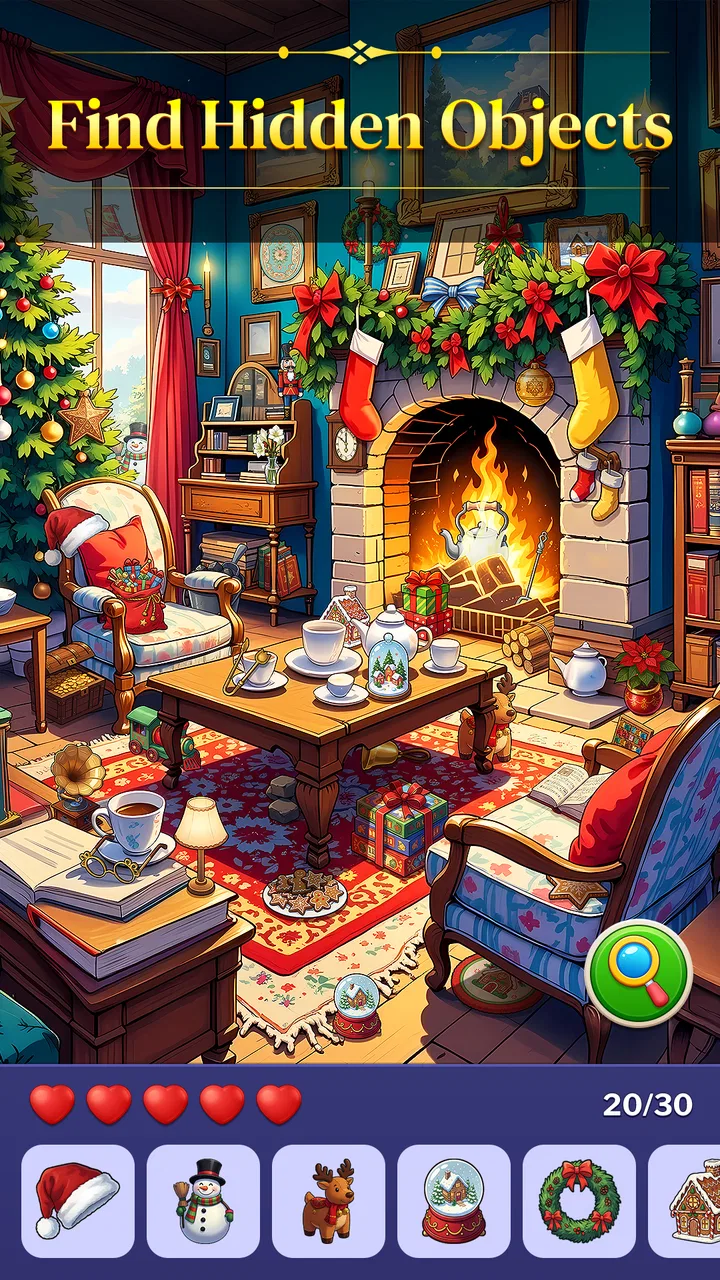
The basic rhythm is easy to understand. A scene presents a collection of visual details, and I scan it for the requested objects. There is no lengthy tutorial to study before the idea becomes clear. That immediacy matters because the strongest use case is often an unplanned one: waiting for an appointment, taking a break between tasks, or wanting something gentler than social media before bed.
You May Also Like

 Blood Strike: 2.5 Anniversary
Blood Strike’s Loadouts Turn Every Drop Into a Tactical Gamble
A close look at Blood Strike’s custom loadouts: how fast access to signature weapons reshapes its battle royale rhythm, rewards preparation, and narrows the gap between fights.

 Pandora - Music & Podcasts
Pandora’s Music Is Easy to Start, but Harder to Recover
Pandora’s strength is its low-effort path from a seed to a station. Its weak spot is how much confidence it asks you to place in connection, setup, and quiet recovery.

 8 Ball Pool
 Is Built on Rivalries, Rematches, and Routine
A close look at the rivalries, rematches, shared routines, and unanswered safety questions that turn a quick pool match into a persistent mobile community.

 Samsung Music
’s Quiet Strength Is Playing What You Already Own
Its reach comes less from spectacle than from dependable access to a personal library. That simplicity is both the app’s strongest retention engine and its ceiling.

 AccuWeather: Weather Radar
AccuWeather Review: A Quick, Clear Forecast for Everyday Decisions
For everyday plans, the best forecast is the one you can understand quickly. AccuWeather makes rain timing, radar, and local conditions easy to act on, with a few trade-offs.

 Hill Climb Racing
Why Hill Climb Racing Still Turns Crashes Into One More Run
A tiny car, a bumpy hill and one more upgrade: Hill Climb Racing keeps resurfacing because its simple chaos makes every near-miss feel personal.
More From Our News Desk



In my experience, the three-minute format gives each round a useful boundary. I do not have to commit to a long level or remember a complicated chain of moves after putting the phone down. If I only have a moment, one search feels complete rather than interrupted. If I have more time, I can continue, but the design still respects the short-session player.
The visual-search format also creates a different kind of concentration from matching games. Instead of quickly swapping pieces or reacting to a timer, I slow down and inspect the scene. That makes it a good fit when I want my attention occupied without the pressure of a competitive score chase. It is especially pleasant for players who enjoy noticing small shapes, color differences, and objects that blend into their surroundings.
There is a trade-off here. Players who need constant novelty, dramatic progression, or a strong narrative may find the central activity too focused. The pleasure comes from observation itself, so if looking through a busy image feels repetitive to you, the short rounds will not automatically solve that problem. The game is relaxing because it keeps its promise small, not because it offers a huge variety of systems.
What makes the first few sessions approachable
I like that the core challenge is readable almost immediately. A player who has never tried a hidden-object game can understand the goal without learning a new control scheme. That makes it suitable for casual players and for sharing with someone who does not normally play games. The age rating of Everyone reinforces that broad approach, although younger players may still benefit from an adult helping them understand the visual task.
My practical tip is to avoid staring at the whole scene at once. I get better results by dividing the image into sections, checking the edges first, and then moving across the center in a steady pattern. This is more effective than repeatedly tapping at random. It also makes the game feel less frantic, because I am turning each search into a small visual routine.
Another useful habit is to pause mentally after finding an obvious object. The easiest item can draw attention away from several less noticeable ones nearby. I found that scanning by shape rather than by expected color helps when an object is partly blended into the background. These are simple techniques, but they make the short rounds feel more deliberate and can reduce the frustration of repeatedly missing the same target.
Speed expectations and the effect of short rounds
The game’s strongest speed advantage is not a claimed loading measurement; it is the limited commitment built into each session. A round is designed around a quick search, so the experience feels naturally suited to brief play. I can use it when I would not bother starting a larger puzzle game, because there is less mental preparation and no need to set aside a full block of time.
That does not mean every player will experience the same responsiveness. The phone, operating system, available storage, background activity, and connection conditions can all affect how an app feels. I would not choose this title specifically for demanding graphics performance, but its simple puzzle premise makes it a more sensible candidate for everyday casual play than a visually intensive action game.
When I am in a hurry, the short structure helps me decide whether to start a round. I know the intended scale of the activity, and that clarity is valuable. A longer hidden-object title can be rewarding, but it may also make a quick break feel like an unfinished task. Here, the compact format reduces that pressure.
There is one speed-related limitation: careful searching is still the point, so the game cannot make every session feel fast if I am struggling to identify an item. The app may be quick to understand, but the player’s own visual scanning determines much of the pace. I would not recommend it to someone who wants instant action or constant rapid rewards.
Where heavier use can expose friction
Short rounds are easy to fit into a day, but repeated searching can become more demanding than the store summary suggests. After several scenes, I notice that my attention, rather than my device, becomes the limiting resource. Dense images require sustained focus, and that can be tiring if I keep playing without a break. I get more enjoyment by treating the game as a sequence of small pauses instead of an endless session.
This is also where the difference between relaxing and effortless becomes important. A hidden-object puzzle can calm me when I am in the mood to look closely, but it can become irritating when my eyes are tired or the room has glare on the screen. Playing in a comfortable position and increasing screen brightness only as much as needed makes a noticeable practical difference. I would avoid using it as a late-night activity if visual concentration keeps me awake.
For frequent players, the main question is whether the scene-based search remains satisfying over time. The game’s identity is clear, but that clarity can feel narrow compared with puzzle collections that alternate between wordplay, logic grids, matching, and physics challenges. If I want variety during a long commute, I would probably combine this with another puzzle rather than rely on it alone.
The free entry point is helpful, but in-app purchases range from $0.99 to $99.99 per item. That spread makes it worth paying attention to purchase prompts and deciding in advance whether I want to spend anything. I appreciate being able to try the core experience without an upfront price, yet I would recommend keeping purchase controls protected if a child might use the device. Free installation does not mean every optional item has the same cost.
Reliability, recovery, and picking up after an interruption
For a game built around brief sessions, recovery matters almost as much as the puzzle itself. A good short-break app should fit around real life: a message arrives, a meeting starts, or I simply put the phone away. The compact design makes interruptions less damaging because I am less likely to be in the middle of a long story sequence or a complicated multi-stage challenge.
I still treat each round as something to finish when possible. If I know I will be interrupted in a few seconds, I do not begin a new search. That is not a criticism of this particular title so much as a sensible habit for any visual puzzle: losing concentration can make it harder to remember which parts of the image I already checked.
From a reliability perspective, I would judge the game by how consistently it lets me return to the simple activity it promises. The current version is 1.21.0, and the title has reached over one million installs, with an average rating of 4.9 from about 124 thousand ratings. Those figures suggest that many players find the overall experience dependable and appealing, although popularity alone cannot guarantee identical behavior on every phone.
If the app closes or the device becomes unavailable during play, I would first reopen it and see whether the active search resumes naturally. I would not assume that every moment of progress is preserved unless the game makes that clear on the device. My safest workflow is to finish a round before switching apps when the result matters to me. That approach also suits the game’s short format and avoids turning a relaxing break into a recovery exercise.
One benefit of the straightforward design is that there are fewer systems to keep track of. I am not managing a large inventory, building a complicated character, or maintaining a long strategic plan. That lowers the mental cost of returning after time away. I can play again without remembering a plot or reconstructing a previous tactic, which is a genuine advantage over more elaborate puzzle adventures.
Device limits, operating system support, and resource expectations
The listed minimum requirement is Android 7.0, so the game is available to a broad range of Android devices, including phones that are not recent flagship models. That does not make every older phone equally comfortable, however. Screen size, display clarity, touch accuracy, and battery condition are particularly relevant for a hidden-object game because the challenge depends on seeing small details and tapping them precisely.
On a compact or aging screen, the central issue may be readability rather than raw processing power. A scene that feels comfortable on a larger display can become cramped on a smaller one, especially when several objects are close together. I would choose a device with a clean, responsive screen if possible. Someone with eyesight difficulties should also consider whether the visual density is comfortable before committing to long sessions.
Resource demands are best understood cautiously. This is a puzzle game centered on static visual searching rather than a demanding three-dimensional world, so I would expect it to be a more modest everyday option than a modern action title. Still, I would not promise identical battery use or memory behavior across all devices. Older hardware, many open apps, and limited free storage can change the experience.
My practical setup is simple: close unnecessary background apps if the phone already feels sluggish, keep enough storage available for normal updates, and play on a stable screen rather than while walking. These steps are not special tricks hidden in the game; they are ways to protect the visual accuracy the game needs. The less I fight the device, the more the puzzle can remain a calm observation exercise.
People using older Android versions should check compatibility before planning around the game, because Android 7.0 is the stated floor. For everyone else, the more important question is comfort. A device can technically run a puzzle and still be a poor match if the screen makes small objects hard to distinguish or taps register inconsistently.
How it compares with other puzzle choices
Compared with match-three games, this title is less reflexive and less dependent on building combinations quickly. I do not have to scan for possible chains under the same kind of pressure. That makes it a better choice when I want quiet attention rather than rapid decision-making. On the other hand, match-three games often provide a clearer sense of escalating mechanics, so they may be more satisfying for players who enjoy planning moves and watching a board change dramatically.
Compared with word puzzles, the challenge here is visual instead of language-based. That is useful when I am tired of clues, spelling, or vocabulary, and it can make the game more accessible across different language backgrounds. The compromise is that success depends heavily on image clarity and visual patience. A word game may be easier to enjoy away from a bright or small screen, while this one benefits from comfortable viewing conditions.
Compared with large hidden-object adventures, the short-session approach is the defining difference. A bigger adventure can offer story, exploration, and a stronger feeling of progression. I would pick that kind of game for a weekend session when I want immersion. I would pick this one for the gap between two activities, when I want the search itself and do not want a long commitment.
Compared with minimalist logic games, the experience is more observational than analytical. I am not proving a sequence or optimizing a solution; I am training my attention to notice what is already present. That can feel more relaxing, but it may not satisfy someone who wants a puzzle with one elegant answer or a deep strategic layer.
Who should play it, and who should skip it
I would recommend it to casual Android players who enjoy visual details, prefer short rounds, and want a free game that can be understood without a long learning curve. It is also a reasonable option for a family device because the content rating is Everyone, provided that an adult manages purchases and chooses comfortable play conditions for younger users.
It suits a realistic everyday scenario particularly well: I might have three minutes before leaving home, open a round while waiting for a kettle to boil, and stop once the search is complete. The game gives that small interval a clear beginning and end. It is less suitable during situations that demand full attention, such as walking, traveling through traffic, or supervising something important, because finding objects requires looking closely at the screen.
I would skip it if I need a rich story, competitive multiplayer, complex strategy, or a large range of puzzle types in one app. I would also hesitate if visual searching quickly causes eye strain or if I dislike scenes that ask me to inspect many small details. In those cases, a word, number, or logic puzzle may be a better match.
Players considering spending money should start with the free experience and set a personal limit before making any purchase. The available item prices extend from $0.99 to $99.99, so the right approach is deliberate rather than impulsive. I would not treat optional purchases as necessary to decide whether the core format suits me.
My performance verdict after using it as a short-break game
The best way to judge this game is by how well it respects a small amount of free time. On that measure, it has a clear advantage. The search format is easy to enter, the rounds are intentionally brief, and the visual activity can feel calming when I want focus without pressure. Its broad Android support, free starting price, and Everyone rating make it approachable for a wide audience.
Its limitations are equally clear. The experience depends on visual comfort, careful attention, and personal tolerance for repeated hidden-object searches. It is not the right tool for high-energy play or deep puzzle variety. Resource behavior can vary by device, and anyone using older hardware should pay more attention to screen quality and responsiveness than to the game’s modest premise alone.
After weighing those trade-offs, I see Hidden Object Games: Seek It as a focused casual game rather than an all-purpose puzzle collection. I would keep it installed for waiting rooms, short breaks, and moments when I want to slow my thoughts down without starting something demanding. If that specific use case sounds appealing, the free download is an easy experiment. If you want story, strategy, or constant novelty, I would choose a different puzzle style instead.
FAQs for Hidden Object Games: Seek It
01What are Hidden Object Games: Seek It all about?
Hidden Object Games: Seek It is a genre of puzzle games where players must find items hidden within a scene. These games typically feature a series of levels with different themes and stories. Players use their observation skills to locate objects as quickly as possible, often within a time limit or with a limited number of hints.
02How do I play Hidden Object Games: Seek It effectively?
To play effectively, focus on scanning the scene systematically. Start by identifying the easiest objects to spot, then use hints wisely to locate trickier items. Pay attention to the details and patterns in each scene. Familiarizing yourself with common object shapes and colors in the game can also improve your speed and accuracy.
03Are there any in-app purchases in Hidden Object Games: Seek It?
Yes, many hidden object games offer in-app purchases. These can include additional hints, new levels, or special items to enhance gameplay. While the base game is often free, these purchases can provide a more enriched experience and help players progress faster, though they are not required to enjoy the game.
04Can I play Hidden Object Games: Seek It offline?
Many hidden object games offer offline play, allowing you to enjoy the game without an internet connection. However, some features, such as downloading new levels or accessing certain in-app purchases, may require an internet connection. Always check the app's specifications to ensure it meets your offline gaming needs.
05What age group is Hidden Object Games: Seek It suitable for?
Hidden Object Games: Seek It is generally suitable for players of all ages. The game’s content is typically family-friendly, focusing on puzzle-solving and observation skills. However, younger players may require assistance due to the complexity of some puzzles. Always review the app’s rating and description to ensure it aligns with age appropriateness.
Pros
- Engaging storylines keep players hooked.
- Variety of scenes enhances replay value.
- Intuitive interface for easy navigation.
- Regular updates with new levels.
- Offers offline play mode.
Cons
- Advertisements can be intrusive.
- Some levels require in-app purchases.
- Limited hint system can be frustrating.
- Graphics may lag on older devices.
- Music can become repetitive over time.

Hidden Object Games: Seek It
Gallery